Engineer working in military aerospace with an interest in Astrophysics, Biology, Archaeology and Paleontology
View all posts by Alex Peters
3 thoughts on ““The Battle of Alford” (Version 1) by William Maldon Bateman (LN&Q)”
Hi Alex,
I have all three accounts,as well as the 1907 and 1991 criticism’s of them.
Over the past few weeks I have studied them very carefully. I believe that Bateman possibly wrote the first account sometime mid to late 1800’s, following his death Tyack wrote an account for ‘Bygone Lincolnshire’ in 1891 and Winn based his poem on Bateman’s account, again possibly after his death.
The first thing is to establish the date, Winn’s poem says ‘Thank God! Since sixteen forty three from civil war we have been free’ which clearly puts it post 1643 and the mention of the Riby battle puts it in 1645. In the other two accounts July 1645 is mentioned.
I have asked myself and several other people the question, Why would somebody write an account of the battle at least 200 years later? The two answers seem to be; a] Documentation was discovered detailing an eye witness account. b] The story was made up for notoriety and is based on a mixture of truth and misrepresentation. a] It is suggested that papers and letters were found in a house in Alford. Something I am trying to chase up. b] Bateman was not a historian, he fits the bill for someone who would make up a story for notoriety which is fairly obvious from research!
There are a number of ‘facts’ that confuse me. It is essential, and potentially easy, to verify the names of the people mentioned in all three accounts. I have researched everyone mentioned and can find nothing to say that Sir Lionel Weldon, Sir William Ham[n]by, Payne or Moody actually existed. All four names at first glance appear credible but don’t hold up to close scrutiny.
You suggest that Cavendish could have been one of 5 people, two of whom were dead, two in exile and one of them only 15 so highly unlikely to be in charge. Penruddock resigned his commision Easter 1645. Manchester resigned his commision in June of 1645.
To date there is no evidence that a battle ever happened in Welton. I can give a logical explanation for most of the things you are suggesting as evidence and I think there is a lot of research that needs to be done as a foundation for the argument.
There is evidence in the parish records that the church has been in use from 1558 to the present date. There is no evidence of a fire or catastrophic collapse other than the tower in 1791. Many church towers in Lincolnshire collapsed due to various reasons including poor build quality and materials, Welton appears to have been built of inferior stone. Thwaite may be built of the same stone as the church, in fact it is highly likely with them both having association with Thornton Abbey. Other things need substantiating as well.
My thoughts are that Bateman wrote the first account based on his limited knowledge, using figures from history and his local knowledge to write a seemingly credible account that would bring him notoriety and potentially money. Tyack then was tasked with writing an account for Bygone Lincolnshire in 1891. He used Bateman’s account as a basis for his writings, not realising that some of the facts were indeed wrong. Winn wrote a poem based on Bateman’s account, he published it in 1890. Winn’s aim was to write a poem and not to relate history so his account can’t be taken as a true record. Bateman’s account is unlikely to have come from a written account from the 1640’s due to the inaccuracies and the similarity of all three accounts could not have come from three separate oral accounts.
The church, and indeed the village, has a fascinating history story, worthy of research, which shouldn’t be marred by fantastic tales that, at this moment in time, have no real foundation.
I am more than happy to get together and talk about my concerns.
Thank you very much for your continued support and constructive criticism of the investigation into the history of Welton le Marsh. The points you raise (and have also been pointed out by historic critics) are indeed strong challenges to the story of the battle of Alford, Willoughby, Hanby and Welton le Marsh. I believe that the two key points that do not match between the documented accounts of this battle and more securely recorded history are:
• The date: July or September 1643 or 1645
• The identity of Cavendish
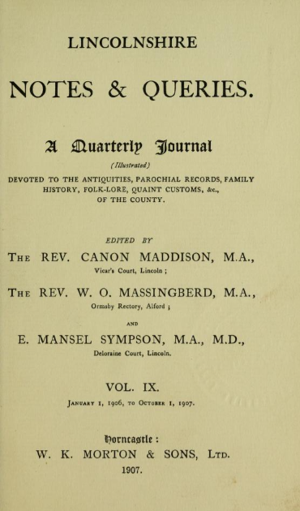
I must thank you very much for your excellent research having found the full version of the Bateman account in the Louth and North Lincs Advertiser as it provides key information for solving this conundrum which was missing from the summarised version in Lincolnshire Notes and Queries.
The date
Historic critics primarily rely on these discrepancies to prove that the story cannot be true. If they are resolved, it does not prove the story is true, but it removes the strongest objections.
I believe it is pretty obvious (and demonstrable) as to what has happened. It would seem to be a remarkable coincidence that Bateman has quoted the date of the Battle of Alford in Lincolnshire as exactly the same as the identically named battle of Alford in Scotland: 2nd July 1645. Clearly he asked someone, or looked up in a book and been quoted this date for the Battle of Alford.
All very well, I hear you say, but can we prove that this is what happened? To do this, it would be helpful to have another historical event mentioned in the story so we can confirm when the events really happened.
Fortunately, Bateman himself gives us this critical piece of information.
At the end of his account of the Battle of Alford, Bateman states “Not long after followed the battle of Winceby which ensured the future quiet of Lincolnshire.”
Therefore, this had to be before 11th October 1643. If we take “not long” as two weeks, this agrees with Oliver Cromwell’s account of a Battle between Louth and the edge of Holland on 29th September 1643 with “20 companies of horse” and “1000 infantry” on the Royalist side. Therefore, I do not believe that (apart from one obviously wrong date) there is any disagreement between the account of this battle and other recorded historical information.
Which Cavendish?
Historically critics have chosen the identity of Cavendish in the account of the battle as a loophole to discredit the story. However, this depended on two things:
• The date of 1645 when no suitable candidate for Cavendish could have participated in the events. (Which as shown above is irrelevant).
• Making an unsupported assertion that the character was specifically the dashing General Charles Cavendish (1620-1643), son of the Duke of Devonshire, who was killed at the battle of Gainsborough. The account does not make a distinction between the five candidates of that name.
It is entirely consistent that the character referenced was Colonel Charles Cavendish, Viscount Mansfield 1626-1659, eldest son of the Duke of Newcastle. Who was active as a Royalist cavalry commander in England in 1643. He was distinguished by his working organising troop movements and raising funds whilst avoiding the front line. Batemans account of Cavendish fleeing the field is entirely consistent with this.
Thank you for continued study of this topic and I hope you will discuss the above with me and determine if it leaves any logical gaps in the account.
As you know I am still keen to see the story of the battle being true but I am finding it difficult because there are so many assumptions to be made about the ‘facts’ in the two accounts. Anything that can be verified by historical research only adds to the confusion rather than helping.
The fact that Bateman gave a very detailed account and yet got the date wrong suggests that it is also likely to be a made up account.
Is there documentary evidence to say that Charles Cavendish, Viscount Mansfield, actually took an active role in battle, he was only 17 in 1643?
A big issue that remains is the four characters, Weldon, Hanby, Payne and Moody. I can not find anything, other than the three accounts, that suggests any of them existed. More serious research needs to be done to prove their existence.
There has to be documentation somewhere, most likely in church records, that records the fact that either St Wilfred’s or St Martin’s was badly damaged due to a conflict in the civil war. A systematic search by metal detector surely should provide evidence of a siege at either church.
There are several other questions that need answering;
According to Bateman there were ‘letters, and other documents respecting the conspiracy which completely put to rest all doubts about the matter.’ This suggests that there was debate about it before he published his document. Hopefully these documents still exist or evidence of the debate. The Grammar School may hold some records.
Bateman published two books, one about poetry in which the validity of him being the author of some of the poems has been questioned, the other is a book of manuscripts that may have information about his account of the battle. I will hopefully have access to this book in the next couple of weeks.
Is there anything in the Massingberd documents that mention the battle? Are there any papers relating to the Fitzwilliams at Withern/Mablethorpe that are relevant as, according to Bateman, Cavendish visited them during the conflict. You say it was a potentially larger conflict than Winceby, why is there not even anything alluding to it in civil war documents?
It would be very useful if a few of us could get together to discuss things in more detail. I would suggest we meet up with Simon, Ian and anybody else you can think of.
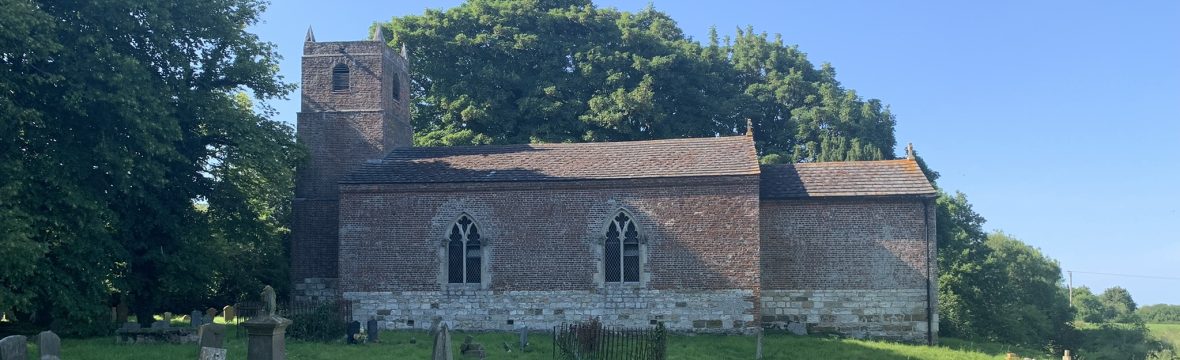

 Welton le Marsh
Hi Alex,
I have all three accounts,as well as the 1907 and 1991 criticism’s of them.
Over the past few weeks I have studied them very carefully. I believe that Bateman possibly wrote the first account sometime mid to late 1800’s, following his death Tyack wrote an account for ‘Bygone Lincolnshire’ in 1891 and Winn based his poem on Bateman’s account, again possibly after his death.
The first thing is to establish the date, Winn’s poem says ‘Thank God! Since sixteen forty three from civil war we have been free’ which clearly puts it post 1643 and the mention of the Riby battle puts it in 1645. In the other two accounts July 1645 is mentioned.
I have asked myself and several other people the question, Why would somebody write an account of the battle at least 200 years later? The two answers seem to be; a] Documentation was discovered detailing an eye witness account. b] The story was made up for notoriety and is based on a mixture of truth and misrepresentation. a] It is suggested that papers and letters were found in a house in Alford. Something I am trying to chase up. b] Bateman was not a historian, he fits the bill for someone who would make up a story for notoriety which is fairly obvious from research!
There are a number of ‘facts’ that confuse me. It is essential, and potentially easy, to verify the names of the people mentioned in all three accounts. I have researched everyone mentioned and can find nothing to say that Sir Lionel Weldon, Sir William Ham[n]by, Payne or Moody actually existed. All four names at first glance appear credible but don’t hold up to close scrutiny.
You suggest that Cavendish could have been one of 5 people, two of whom were dead, two in exile and one of them only 15 so highly unlikely to be in charge. Penruddock resigned his commision Easter 1645. Manchester resigned his commision in June of 1645.
To date there is no evidence that a battle ever happened in Welton. I can give a logical explanation for most of the things you are suggesting as evidence and I think there is a lot of research that needs to be done as a foundation for the argument.
There is evidence in the parish records that the church has been in use from 1558 to the present date. There is no evidence of a fire or catastrophic collapse other than the tower in 1791. Many church towers in Lincolnshire collapsed due to various reasons including poor build quality and materials, Welton appears to have been built of inferior stone. Thwaite may be built of the same stone as the church, in fact it is highly likely with them both having association with Thornton Abbey. Other things need substantiating as well.
My thoughts are that Bateman wrote the first account based on his limited knowledge, using figures from history and his local knowledge to write a seemingly credible account that would bring him notoriety and potentially money. Tyack then was tasked with writing an account for Bygone Lincolnshire in 1891. He used Bateman’s account as a basis for his writings, not realising that some of the facts were indeed wrong. Winn wrote a poem based on Bateman’s account, he published it in 1890. Winn’s aim was to write a poem and not to relate history so his account can’t be taken as a true record. Bateman’s account is unlikely to have come from a written account from the 1640’s due to the inaccuracies and the similarity of all three accounts could not have come from three separate oral accounts.
The church, and indeed the village, has a fascinating history story, worthy of research, which shouldn’t be marred by fantastic tales that, at this moment in time, have no real foundation.
I am more than happy to get together and talk about my concerns.
Regards
Trevor
LikeLike
Trevor,
Thank you very much for your continued support and constructive criticism of the investigation into the history of Welton le Marsh. The points you raise (and have also been pointed out by historic critics) are indeed strong challenges to the story of the battle of Alford, Willoughby, Hanby and Welton le Marsh. I believe that the two key points that do not match between the documented accounts of this battle and more securely recorded history are:
• The date: July or September 1643 or 1645
• The identity of Cavendish
I must thank you very much for your excellent research having found the full version of the Bateman account in the Louth and North Lincs Advertiser as it provides key information for solving this conundrum which was missing from the summarised version in Lincolnshire Notes and Queries.
The date
Historic critics primarily rely on these discrepancies to prove that the story cannot be true. If they are resolved, it does not prove the story is true, but it removes the strongest objections.
I believe it is pretty obvious (and demonstrable) as to what has happened. It would seem to be a remarkable coincidence that Bateman has quoted the date of the Battle of Alford in Lincolnshire as exactly the same as the identically named battle of Alford in Scotland: 2nd July 1645. Clearly he asked someone, or looked up in a book and been quoted this date for the Battle of Alford.
All very well, I hear you say, but can we prove that this is what happened? To do this, it would be helpful to have another historical event mentioned in the story so we can confirm when the events really happened.
Fortunately, Bateman himself gives us this critical piece of information.
At the end of his account of the Battle of Alford, Bateman states “Not long after followed the battle of Winceby which ensured the future quiet of Lincolnshire.”
Therefore, this had to be before 11th October 1643. If we take “not long” as two weeks, this agrees with Oliver Cromwell’s account of a Battle between Louth and the edge of Holland on 29th September 1643 with “20 companies of horse” and “1000 infantry” on the Royalist side. Therefore, I do not believe that (apart from one obviously wrong date) there is any disagreement between the account of this battle and other recorded historical information.
Which Cavendish?
Historically critics have chosen the identity of Cavendish in the account of the battle as a loophole to discredit the story. However, this depended on two things:
• The date of 1645 when no suitable candidate for Cavendish could have participated in the events. (Which as shown above is irrelevant).
• Making an unsupported assertion that the character was specifically the dashing General Charles Cavendish (1620-1643), son of the Duke of Devonshire, who was killed at the battle of Gainsborough. The account does not make a distinction between the five candidates of that name.
It is entirely consistent that the character referenced was Colonel Charles Cavendish, Viscount Mansfield 1626-1659, eldest son of the Duke of Newcastle. Who was active as a Royalist cavalry commander in England in 1643. He was distinguished by his working organising troop movements and raising funds whilst avoiding the front line. Batemans account of Cavendish fleeing the field is entirely consistent with this.
Thank you for continued study of this topic and I hope you will discuss the above with me and determine if it leaves any logical gaps in the account.
Regards
Alex
Alex
LikeLike
Hi Alex,
As you know I am still keen to see the story of the battle being true but I am finding it difficult because there are so many assumptions to be made about the ‘facts’ in the two accounts. Anything that can be verified by historical research only adds to the confusion rather than helping.
The fact that Bateman gave a very detailed account and yet got the date wrong suggests that it is also likely to be a made up account.
Is there documentary evidence to say that Charles Cavendish, Viscount Mansfield, actually took an active role in battle, he was only 17 in 1643?
A big issue that remains is the four characters, Weldon, Hanby, Payne and Moody. I can not find anything, other than the three accounts, that suggests any of them existed. More serious research needs to be done to prove their existence.
There has to be documentation somewhere, most likely in church records, that records the fact that either St Wilfred’s or St Martin’s was badly damaged due to a conflict in the civil war. A systematic search by metal detector surely should provide evidence of a siege at either church.
There are several other questions that need answering;
According to Bateman there were ‘letters, and other documents respecting the conspiracy which completely put to rest all doubts about the matter.’ This suggests that there was debate about it before he published his document. Hopefully these documents still exist or evidence of the debate. The Grammar School may hold some records.
Bateman published two books, one about poetry in which the validity of him being the author of some of the poems has been questioned, the other is a book of manuscripts that may have information about his account of the battle. I will hopefully have access to this book in the next couple of weeks.
Is there anything in the Massingberd documents that mention the battle? Are there any papers relating to the Fitzwilliams at Withern/Mablethorpe that are relevant as, according to Bateman, Cavendish visited them during the conflict. You say it was a potentially larger conflict than Winceby, why is there not even anything alluding to it in civil war documents?
It would be very useful if a few of us could get together to discuss things in more detail. I would suggest we meet up with Simon, Ian and anybody else you can think of.
Regards
Trevor
LikeLike