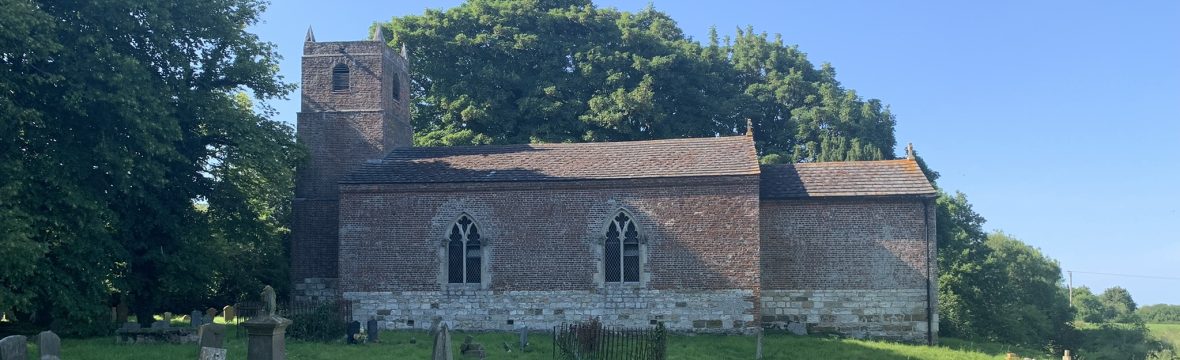
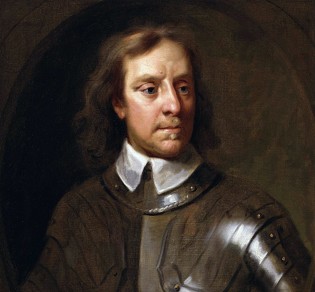
Oliver Cromwell, eye witness to the Battle of Alford, Willoughby, Hanby and Welton le Marsh
Dr. Jonathan Fitzgibbons, Senior Lecturer in Early Modern History at the University of Lincoln, reports a letter from Oliver Cromwell dated 28 Sept. 1643. “Cromwell mentions that just as his forces were on the edge of Holland they were ambushed by Henderson’s larger force of Royalists from Newark – they managed to get away to Boston losing only a few men, but it’s not clear where exactly this encounter happened”.
Dr Fitzgibbons kindly provided the reference to Cromwell’s letters of 26th and 28th September 1643, reproduced below from the book “Oliver Cromwell’s letters and speeches” by Thomas Carlyle, 1871. There are a number of details in the text that support the three antiquarian accounts fo the battle of Alford, Hanby and Welton le Marsh. It should be considered that other researchers may not have considered this possible location for the events, unless they were specifically looking for those clues, which are subtle, as can be seen:
- Fairfax lands at Saltfleet on 26th September 1643 and Cromwell deters a force of Royalist cavalry. This demonstrates that Cromwell and Fairfax were approaching Holland in Lincolnshire (see notes below) towards its Northern boundary.
- Cromwell states “we all marched towards Holland“. This is the old “Part of Holland” (ridings or division of Lincolnshire. See 1870-72, John Marius Wilson’s Imperial Gazetteer of England and Wales). (The other parts being Lindsey and Kesteven). https://en.wikipedia.org/wiki/Parts_of_Lincolnshire
- Cromwell refers to the engagement at “The edge of Holland“. The Wapentake of Candleshoe is the Northern border of which contains Welton le Marsh, the site of the reported Church siege.
- One common objection from readers of the story of the battle of Alford, Hanby and Welton is the list of significant characters in the English Civil War being referred to in the antiquarian accounts. A footnote by Carlyle under the letter suggests that the Earl of Manchester (overall commander of Parliamentarian forces in the East of England) joined Cromwell and Fairfax at the time (29th September 1643) of the battle referred to in the letter, although the language is somewhat contorted. “The Earl of Manchester, recaptor of Lynn Regis lately, is still besieging and retaking certain minor strengths and Fen garrisons,—sweeping the intrusive Royalists out of those Southern Towns of Lincolnshire. This once done, his Foot once joined to Cromwell’s and Fairfax’s Horse, something may be expected in the Midland parts too.”
- After a long discussion on the morals of commandeering horses from local civilians, to provide for his troops, in his letter of 28th September 1643 Cromwell states “A horse was sent to me, which was seized out of the hands of one Mr Goldsmith of Wilby.” Wilby must surely be a phonetic equivalent of the village of Willoughby in the middle of the battle area, halfway between Alford and Welton le Marsh. Willoughby is mentioned in all three antiquarian accounts.
Letter Tuesday, 26th September 1643. Holland, Lincolnshire.
The Lord Willoughby’ of Parham ‘and Colonel Cromwell came to Hull, to consult with the ‘Lord Fairfax; but made no stay: and the same day, Sir ‘ Thomas Fairfax crossed Humber with Twenty Troops of Horse, “to join with Cromwell’s forces in Lincolnshire.’!3 For the Marquis of Newcastle is begirdling, and ever more closely besieging, the Lord Fairfax in Hull; which has obliged him to ship his brave Son, with all the horse, across the Humber, in this manner: horse are useless here; under the Earl of Manchester, on the other side, they may be of use.
The landing took place at Saltfleet that same afternoon, say the Newspapers: here now is what followed thereupon,—successful though rather dangerous march into the safe parts of Lincolnshire, and continuance of the drillings, fightings, and enlistments there. Committee-men ‘Spring and Barrow’ are known to us; of Margery and ‘the Malignants’ horses’ we have also had some inkling once.
Letter 28th September 1643, Holland, Lincolnshire
To his honoured Friends, Sir William Spring and Mr. Barrow: These present.
Gentlemen, It hath pleased God to bring off Sir Thomas Fairfax his Horse over the river from Hull, being about One-and-twenty Troops of Horse and Dragoons. The Lincolnshire horse laboured to hinder this work, being about Thirty-four Colours of Horse and Dragoons : we marched up to their landing-place, and the Lincolnshire Horse retreated.
After they were come over, we all marched towards Holland ; and when we came to our last quarter upon the edge of Holland, the Enemy quartered within four miles of us, and kept the field all night with his whole body : his intendment, as we conceive, was to fight us ;—or hoping to interpose betwixt us and our retreat; having received, to his Thirty-four Colours of Horse, Twenty fresh Troops, ten Companies of ‘Dragoons; and about a Thousand Foot, being General King’s own Regiment. With these he attempted our guards and our quarters ; and, if God had not been merciful, had ruined us before we had known of it; the Five Troops we set to keep the watch failing much of their duty. But we got to horse; and retreated in good order, with the safety of all our Horse of the Association ; not losing four of them that I hear of, and we got five of theirs. And for this we are exceedingly bound to the goodness of God, who brought our troops off with so little loss.
I write unto you to acquaint you with this; the rather that God may be acknowledged; and that you may help forward, in sending such force away unto us as lie unprofitably in your country. And especially that Troop of Captain Margery’s, which surely would not be wanting, now we so much need it !
I hear there hath been much exception taken to Captain Margery and his Officers, for taking of horses. I am sorry you should discountenance those who (not to make benefit to themselves, but to serve their Country) are willing to venture their lives, and to purchase to themselves the displeasure of bad men, that they may do a Public benefit. I undertake not to justify all Captain Margery’s actions: but his own conscience knows whether he hath taken the horses of any but Malignants ;—and it were somewhat too hard to put it upon the consciences of your fellow Deputy Lieutenants, whether they have not freed the horses of known Malignants? A fault not less, considering the sad estate of this Kingdom, than to take a horse from a known Honest man ; the offence being against the Public, which is a considerable aggravation! I know not the measure everyone takes of Malignants. I think it is not fit Captain Margery should be the judge: but if he, in this taking of horses, hath observed the plain character of a Malignant, and cannot be charged for one horse otherwise taken,—it had been better that some of the bitterness wherewith he and his have been followed had been spared! The horses that his Coronet Boulry took, he will put himself upon that issue for them all.
If these men be accounted “troublesome to the Country,” I shall be glad you would send them all tome. I’ll bid them welcome. And when they have fought for you, and endured some other difficulties of war which your “honester” men will hardly bear, I pray you then let them go for honest men! I protest unto you, many of those men which are of your Country’s choosing, under Captain Johnson, are so far from serving you, that,—were it not that I have honest Troops to master them,—although they be well paid, yet they are so mutinous that I may justly fear they would cut my throat !—Gentlemen, it may be it provokes some spirits to see such plain men made Captains of Horse. It had been well that men of honour and birth had entered into these employments:—but why do they not appear? Who would have hindered them? But seeing it was necessary the work must go on, better plain men than none ;— but best to have men patient of wants, faithful and conscientious in their employment. And such, I hope, these will approve themselves to be. Let them therefore, if I be thought worthy of any favour, leave your Country with your good wishes and a blessing. I am confident they!’ will be well bestowed. And I believe before it be long, you will be in their debt; and then it will not be hard to quit scores.
What arms you can furnish them withal, I beseech you do it. I have hitherto found your kindness great to me :— I know not what I have done to lose it; I love it so well, and price it so high, that I would do my best to gain more.
You have the assured affection of your most humble and faithful servant, OLIVER CROMWELL,
P.S.—I understand there were some exceptions taken at a Horse that was sent to me, which was seized out of the hands of one Mr. Goldsmith of Wilby. If he be not by you judged a Malignant, and that you do not approve of my having of the Horse, I shall as willingly return him again as you shall desire. And therefore, I pray you, signify your pleasure to me herein under your hands. Not that I would, for ten thousand horses, have the Horse to my own private benefit, saving to make use of him for the Public :—for I will most gladly return the value of him to the State. If the Gentleman stand clear in your judgments,—I beg it as a special favour that, if the Gentleman be freely willing to let me have him for my money, let him set his own price: I shall very justly return him the money. Or if he be unwilling to part with him, but keeps him for his own pleasure, be pleased to send me an answer thereof: I shall instantly return him his Horse; and do it with a great deal more satisfaction to myself than keep him.— Therefore I beg it of you to satisfy my desire in this last request; it shall exceedingly oblige me to you. If you do it not, I shall rest very unsatisfied, and the Horse will be a burden to me so long as I shall keep him.
Commentary by Carlyle
The Earl of Manchester, recaptor of Lynn Regis lately, is still besieging and retaking certain minor strengths and Fen garrisons,—sweeping the intrusive Royalists out of those Southern Towns of Lincolnshire. This once done, his Foot once joined to Cromwell’s and Fairfax’s Horse, something may be expected in the Midland parts too.

 Welton le Marsh
thank you Alex for forwarding this very interesting information.
LikeLike